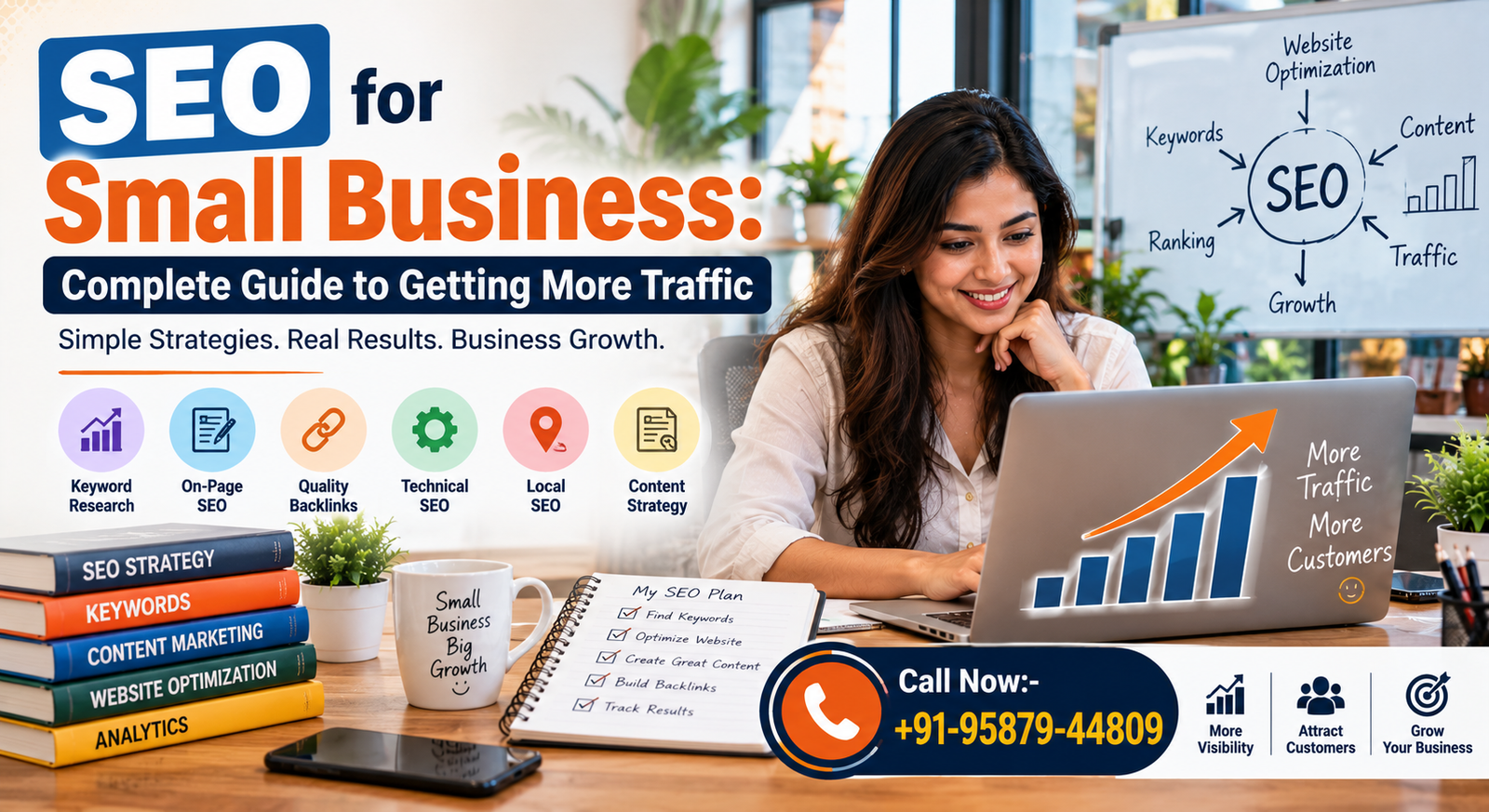
The key to any successful SEO campaign is a keyword in digital marketing. It assists the search engines in knowing what you are offering and makes your site reach the correct audience. Learning how to use keywords in SEO is not a choice; it is a necessity if you want your site to be ranked on Google.
Millions of websites are competing to gain attention in the current competitive digital world. Your content might never be seen by your target audience without the proper SEO keywords. This is the reason why optimization of keywords is a key ingredient in the success of digital marketing.
At Digital Socialite, we are convinced that the right keyword strategy can make your online presence. If you’re a blogger, a digital marketer, or have your own business, then you should know the proper keyword placement and the right keywords. Only this can help you get potential traffic and better rankings.
What is a Keyword in Digital Marketing?
A keyword is a word or phrase that is important for digital marketing because when a user searches for something on Google, they get easy information or their preferred product or services.
For example:
- “digital marketing course”
- “best laptop under 50000”
- “SEO tips for beginners.”
These are keywords that assist the search engines in providing relevant results.
Why keywords matter in SEO
Between offers to search, keywords act as a bridge. Search engines check your content and match it with the relevant keywords and then decide when and where to show your page.
Without appropriate keywords, your content has a low chance of ranking well, no matter how good your content quality is.
Real-life example (Google search intent)
Assume that a user is searching for the “best shoes for running.” Google will show pages containing this keyword and give out information.
This is referred to as ‘search intent,’ and it implies knowing what the user really desires. Ranking success is all about matching the search intent with the appropriate keywords.
Why Keywords are Important for SEO & Digital Marketing
- Helps search engines understand content
Search engines use the SEO keywords to get to know what you are writing about. In the absence of keywords, your content might not be found in the relevant searches.
- Drives Targeted Traffic
By using the correct keywords, you will be able to have users who are interested in your product or service and not just any user.
- Improves ranking & conversions
The right use of keywords can assist your site be ranked higher in the search engines. The more the ranking, the more clicks, the more conversions.
- Supports Content Strategy
Keywords can assist you in planning your content. You are able to build blogs, landing pages, and guides depending on what your audience is searching.
Types of Keywords (With Examples)
To know the right types of keywords is important to build a successful SEO strategy.
1. Short-tail keywords
Short-tail keywords are general and wide search terms.
Example: “shoes”
Characteristics:
- High search volume
- High competition
- Low conversion rate
These are some of the keywords that are hard to rank, particularly with new websites.
2. Long-tail keywords
Long-tail keywords are more specific and longer phrases.
Example: “best running shoes for beginners”.
Characteristics:
- Lower competition
- Higher conversion rate
- More targeted traffic
In terms of SEO, these are considered the most effective keywords because users search this mostly.
3. Latent Semantic Indexing (LSI Keywords)
This keyword is basically related to the main keyword.
Example:
- “running shoes”
- “sports footwear”
Search engines can get the context of your content by using LSI keywords.
4. Transactional Keywords
Transactional keywords refer to the user being prepared to act.
Example: “purchase running shoes online.”
These are keywords that are significant to product pages and e-commerce websites.
5. Informational Keywords
When users have something to learn, informational keywords are used.
Examples: “How to choose running shoes.”
These keywords are ideal blog content and guides.
6. Navigational Keywords
A particular site or brand is found with the help of navigational keywords.
Examples: “Nike official website.”
These are brand-oriented keywords.
What is Keyword Research? (Beginner Guide)
This is mainly a process of identifying the words or phrases that your target audience searches for on Google.
Importance
The keyword research assists you:
- Understand your audience
- Discover trending topics
- Create relevant content
- Improve SEO performance
Your content strategy can fail without the appropriate keyword research.
Search Intent Explanation
Each keyword is not without a reason. This is referred to as search intent.
Types of Search Intent:
- Informational: Learning something
- Navigational: Finding a site.
- Transactional: Buying something
Knowing intent will assist you in producing content that is in line with user expectations.
Best Keyword Research Tools
You must have good tools to identify the appropriate SEO keywords.
1. Google Keyword Planner
Free tool by Google
Provides keyword ideas
Shows search volume
2. Ahrefs
Advanced SEO tool
Shows keyword difficulty
Competitor analysis
3. SEMrush
Comprehensive marketing tool
Keyword tracking
Site audit features
4. Ubersuggest
Beginner-friendly tool
Keyword suggestions
SEO insights
These are tools that will assist you in creating a powerful keyword strategy.
How to Find the Right Keywords (Step-by-Step)
- Identify Your Niche
Begin by knowing your industry and target audience.
- Analyse Competitors
Research competitor sites to determine what keywords they are ranking.
- Use Keyword Tools
Create performance analysis and keyword ideas using tools.
- Check search volume and difficulty.
Select keywords that have:
- Good search volume
- Minimal to moderate competition.
- Focus on long-tail keywords
Long-tail keywords are easier to rank and more conversion-effective.
How to Use Keywords Effectively in Content
Understanding how to use keywords in SEO is necessary to rank content.
- Title Optimisation
Add your main keyword to the title. It enhances ranking and visibility.
- Meta Description
Keywords in the meta description should be used in their natural form to draw clicks.
- URL Slug
Make your URL short and rich in keywords.
Example: /keyword-in-digital-marketing
- Headings (H1, H2, H3)
Make headings with keywords to enhance readability and search engine optimization.
- Content Placement
Naturally insert keywords within your content. Avoid overuse.
- Image ALT Text
Insert keywords into image alt text to optimize image SEO.
What is Keyword Density?
The keyword density helps you to know how often your keywords appear in content
Ideal Percentage-
- 1% to 2% is ideal.
- Avoid keyword stuffing.
Best Practices
- Use variations and synonyms.
- Maintain natural flow
- Focus on readability.
Excessive use of keywords may be detrimental to your SEO.
Common Keyword Mistakes to Avoid
To enhance your SEO, avoid the following mistakes:
- Keyword stuffing
- Ignoring search intent
- Using irrelevant keywords
- Failure to update old content.
- Only focusing on highly competitive keywords.
It is always better to have a balanced strategy of keywords.
Pro Tips for Keyword Optimization (Advanced)
- Use Semantic Keywords
They are synonyms that enhance the relevancy of the content.
- Focus on user intent
Always develop content according to the desires of the users.
- Optimize for voice search
Conversational keywords such as:
“What is a keyword in online marketing?”
- Use Internal Linking
Connect your pages to enhance search engine optimization and navigation.
- Update Content Regularly
Renew your keywords according to trends.
Real-Life Example of Keyword Usage
Before optimization
Title: “Best Shoes”
Problems:
- No clear keyword
- High competition
- Low traffic
After optimisation
Title: Best Running Shoes for Beginners.
Improvements:
- Long-tail keywords.
- Targets a specific audience.
- Higher ranking potential
Result
- Increased traffic
- Better engagement
- Higher conversions
This case demonstrates that a powerful keyword strategy enhances the performance of SEO.
Conclusion
A keyword in digital marketing is not a word but a weapon that will propel your whole SEO strategy. Keywords assist search engines in comprehending what you are writing about and relating it to the appropriate audience.
You can enhance the performance of your website to a great extent by concentrating on keyword research, learning about the types of keywords, and knowing how to use keywords in SEO.
At Digital Socialite, we suggest producing content that is user-centred, keyword-based, and updated frequently. Begin implementing these tips now to improve your rankings, traffic, and business online.
FAQs
1. What is a keyword in SEO?
In SEO, keywords are basically words or phrases that help to provide exact information to the users.
2. How do I find keywords?
You can use such tools as Google Keyword Planner, Ahrefs, SEMrush, and Ubersuggest.
3. What are long-tail keywords?
These keywords are specific phrases with less competitive but high conversion rates.
4. How many keywords should I use?
Naturally use one keyword and some related keywords. Concentrate on quality, not quantity.