Ask ten business owners what they want from their website and most of them land on some version of “I just want it to actually show up when people Google us.” That’s how to get your website on the first page of Google, put plainly. And it’s not a vanity thing to want — page one is where the phone calls come from. Page two might as well be a different website entirely, because almost nobody scrolls there.
Except showing up isn’t really the finish line. A few months back we had a client genuinely excited about a traffic spike, until we looked closer and most of those visitors bounced in under five seconds — wrong intent, wrong page, wrong everything. So when someone asks us how to rank on the first page of Google, our first question back is usually: rank for what term, exactly, and for whom?
There’s no button for how to rank a website on Google overnight either, much as I’d love to hand someone that button. What actually works is duller than that — decent content, a site that doesn’t fall apart on a phone screen, credibility earned slowly, and pages that answer the actual question someone had in their head when they typed. None of it happens over a weekend, and anyone telling you otherwise is selling you something.
At Digital Socialite, this is pretty much the whole job — building a SEO strategy 2026 around how search behaves today, not tactics that quietly stopped working three algorithm updates back. Google first page SEO isn’t about outsmarting anything, really. It’s closer to just being the most useful, trustworthy answer often enough that Google starts noticing on its own. If the goal is to improve Google rankings without gambling on some shortcut that gets penalized six months later, that’s the whole approach in one sentence. Also worth saying plainly: results shift by query, by the searcher’s location, by who else is competing that week — none of which is fully within anyone’s control.
What Does It Mean to Rank on the First Page of Google?
Google first page ranking, boiled down, just means landing somewhere in positions one through ten of the organic results — not the ads up top with the small “Sponsored” label, which run on an entirely separate system. People still call that stretch “the first page” even though it rarely looks like ten uniform links these days. Here’s a distinction worth sitting with: ranking #1 for something nobody searches gets you nothing. Ranking #7 for something people type right before they’re ready to buy is worth considerably more than that empty #1 spot.
First Page Rankings vs. Featured Results
Go search almost anything right now and look at what actually fills the screen. A featured snippet at the top, more often than not. A map pack if there’s a local angle to the query. Sometimes an image row, sometimes a video carousel dropped in the middle of the normal results. Each is a slightly different game, and most businesses only genuinely need to care about one or two of them — not all of them at once.
How Does Google Decide Which Websites Rank?
There’s no formula anyone can hand you here, whatever certain blog posts claim with total confidence. What we do know is it comes down to a handful of things pulling together.
Relevance
Simple test, in theory: does the page actually answer what was typed in? You’d be surprised how many pages talk around a topic for three paragraphs before getting anywhere near answering it.
Content Quality
Is the information accurate and genuinely useful, or does it just look that way for the first two sentences before trailing off into nothing? Readers notice the difference fast. So, increasingly, does Google.
Website Experience
Does it load fast? Work properly on a phone without someone having to pinch and zoom? Is the navigation something a stranger could figure out in five seconds? Fall short on any of these and even great writing is fighting uphill.
Website Authority and Trust
The fuzzier one. Reputation, who’s linking back and why, whether the content reads like someone who actually knows the subject wrote it rather than someone paraphrasing Wikipedia. Not a checklist, more a handful of signals all leaning the same direction at once.
10 Steps to Get Your Website on the First Page of Google
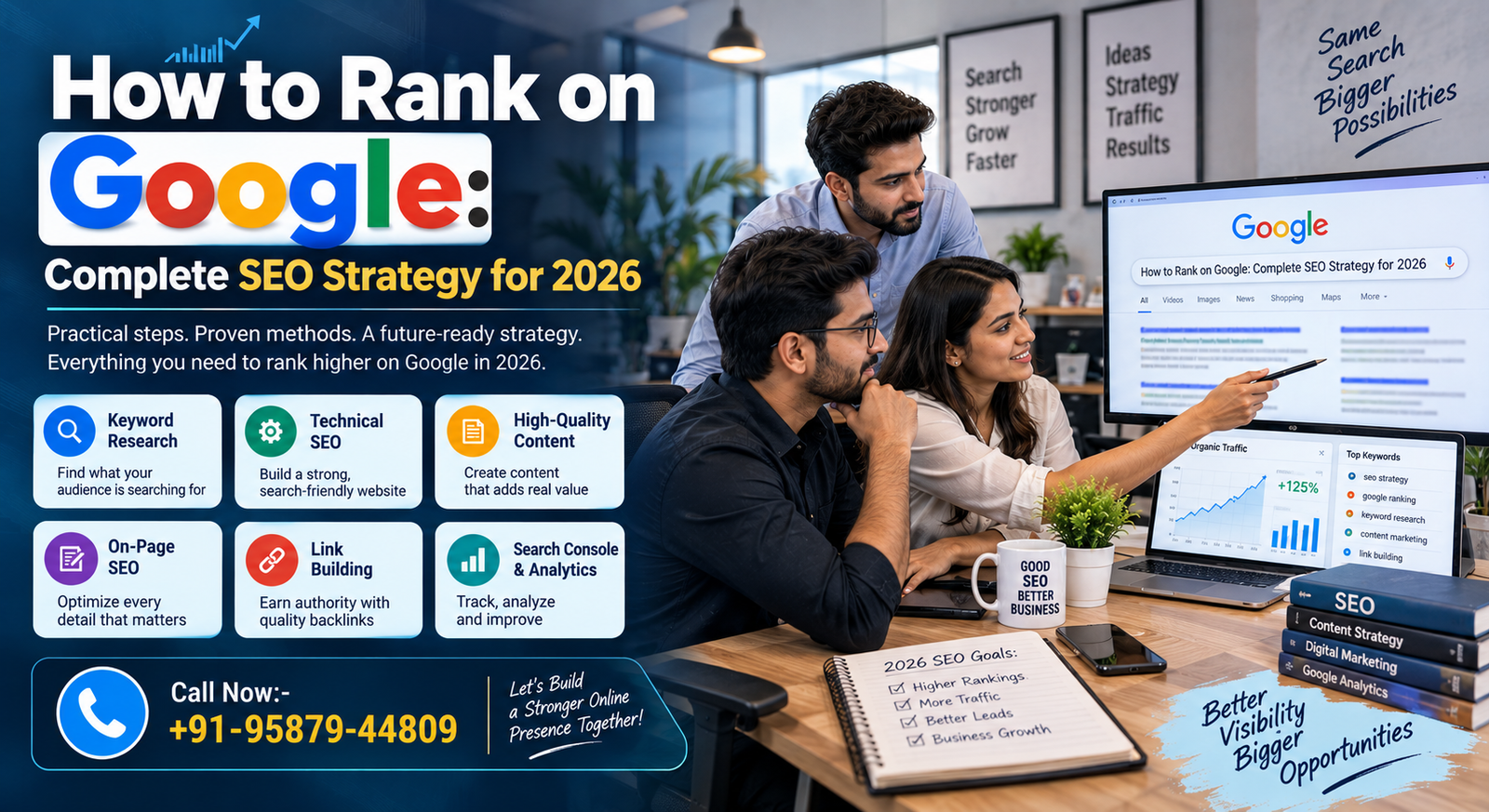
1. Find the Right Keywords
Skip this step and everything downstream gets harder — it’s the single most common shortcut we see businesses take, and it rarely pays off. A solid website SEO strategy starts with what customers actually type, not what sounds good in a strategy meeting. Weigh volume against competition, sure, but intent matters more than either one. Long-tail and location-based phrases tend to convert better simply because whoever’s typing them has a much more specific need already in mind.
Example
“Digital marketing” sounds like a great keyword until you realize half the internet is fighting over it. “Digital marketing company in Jaipur” is a smaller pond, obviously, but whoever’s searching it is a lot closer to actually calling someone.
2. Understand Search Intent
Most searches fall into one of four rough buckets: informational (just wants to know something), navigational (looking for a specific site, like “Digital Socialite login”), commercial investigation (comparing options — “best SEO company near me”), or transactional (ready to act, like “hire an SEO agency”). Knowing which bucket a page is written for matters far more than how many times the keyword shows up on it. The content has to satisfy the actual want behind the search, not just echo the words.
3. Create Helpful and Original Content
A surprising number of websites just don’t do this well. What tends to work: fully answering the real question, using examples that aren’t lifted from five other blogs, skipping the padding paragraphs that exist purely to hit a word count, sounding like an actual person wrote it, and getting revisited when the facts change instead of sitting stale for three years.
Create Content Around Topics, Not Just Keywords
Google’s leaning harder into topical depth lately rather than keyword density. An SEO article naturally touches keyword research, on-page SEO, technical SEO, internal linking, backlinks, local SEO, analytics — not because someone’s cramming terms in, but because that’s genuinely how the subject hangs together.
4. Optimize Your On-Page SEO
SEO Title
Work the topic in without forcing it. A title that reads like a keyword dump helps nobody, least of all the person deciding whether to click it.
Meta Description
Write it for a real person scanning ten results and deciding in about two seconds which one deserves a click.
Headings
A logical H1, H2, H3 structure helps readers skim and helps search engines parse the page. Skip it and both audiences get a little lost.
URL
Short. Readable. Actually describes what’s on the page. Not much more to it than that.
Images
Real filenames, real alt text — not “image1.jpg” or whatever the camera named it automatically.
5. Improve Your Website’s Technical SEO
Crawlability, indexing, your XML sitemap, robots.txt, HTTPS, mobile responsiveness, broken links, canonical URLs, duplicate content, load speed. None of it’s glamorous. All of it quietly decides whether the good content ever gets a fair shot at being found at all.
Check Your Website With Google Search Console
It’s free, and most businesses barely open it, which is honestly a waste. It flags indexing problems, shows the actual search queries bringing people in, and reports impressions, clicks, page experience issues — all in one place, at no cost.
6. Build a Strong Internal Linking Structure
Internal links do more heavy lifting than people give them credit for: helping visitors find related content, helping Google understand how the site fits together, and passing some authority through to the pages that matter most.
Example Internal Linking
A blog post on SEO services might link to your SEO company page, a local SEO page, a technical SEO guide, a keyword research guide. Small thing on its own. Compounds more than most people expect.
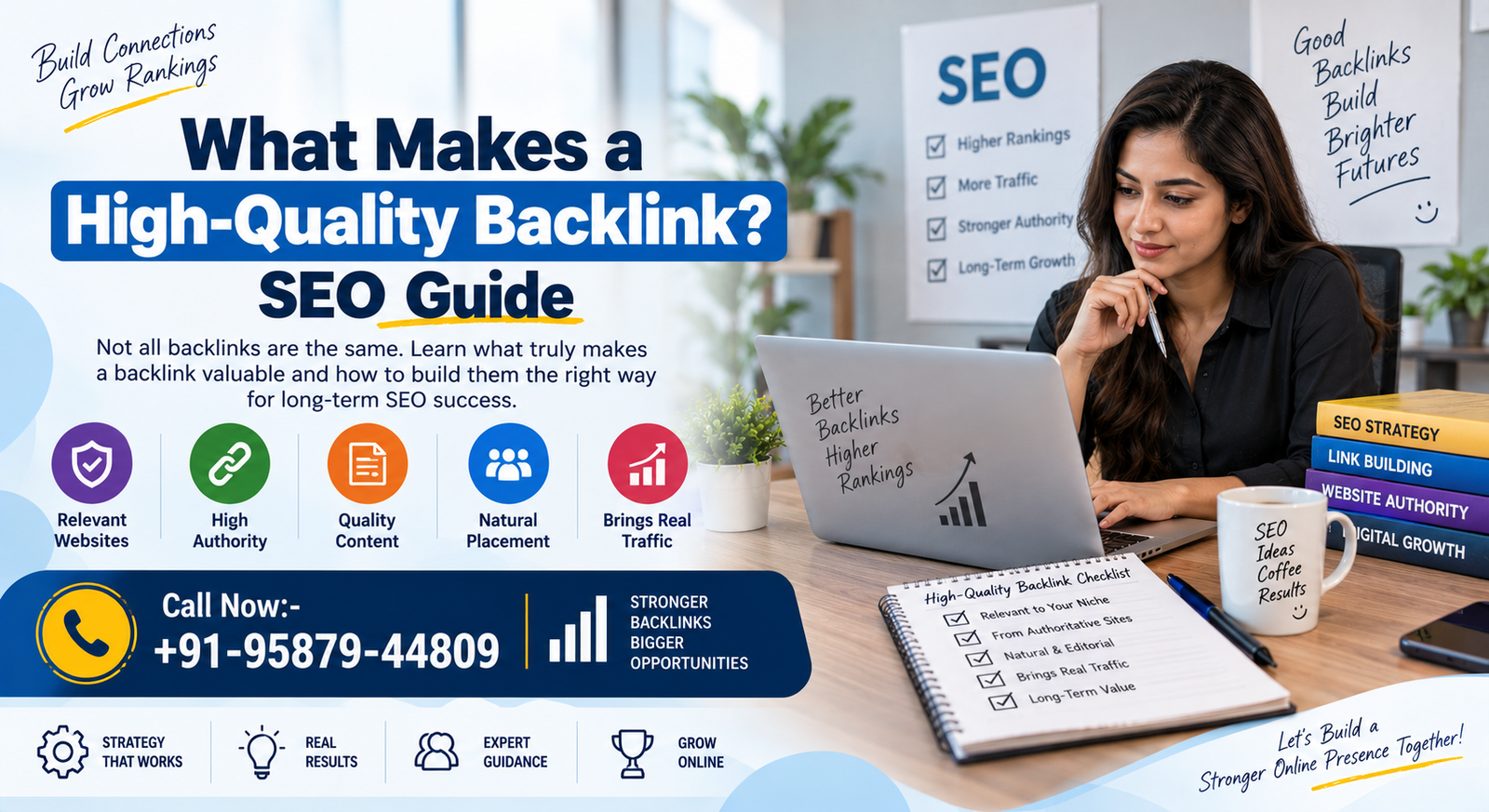
7. Earn High-Quality Backlinks
Plainly put, a backlink is one site vouching for another. Earning them properly usually means digital PR, contributing to industry publications, getting into relevant directories, offering expert commentary somewhere real, publishing original research, or just building genuine partnerships with other businesses.
Quality Matters More Than Quantity
Buying a thousand cheap links from some marketplace isn’t among the Google ranking strategies worth spending money on. It’s closer to a liability with a delay timer attached to it.
8. Optimize for Local SEO
Serving a specific city? Local SEO is usually the fastest route to figuring out how to rank higher on Google for the searches that actually turn into business. That means an actually filled-out Google Business Profile, consistent business details across every listing, local citations, location pages, real reviews from real customers, and local keywords and links.
Example for Jaipur Businesses
Think “Digital Marketing Company in Jaipur,” “SEO Company in Jaipur,” “Social Media Marketing Agency in Jaipur” — that kind of location-first thinking is more or less what a business like Digital Socialite relies on to stay visible to people searching nearby.
9. Improve User Experience
Mobile-friendly, easy to navigate, calls-to-action that are obvious instead of buried in a hover menu somewhere, readable, fast, structured so it makes sense, a contact form that isn’t a small act of punishment to fill out. Getting someone onto the page is only half of it. The page still has to help them do whatever they actually came there to do.
10. Track, Update and Improve Your SEO
This part genuinely never wraps up, and that’s not a sales pitch, it’s just how it works. Watch organic traffic, keyword visibility, click-through rate, impressions, leads, conversions, indexed pages, through Search Console, Analytics, whatever tools are already in use. Old pages deserve a second look every so often too, since intent drifts and offerings change and something that worked two years ago can be quietly losing ground without anyone noticing until much later.
How Long Does It Take to Reach the First Page of Google?
Nobody can hand you a real number, and if someone does, that’s worth being a little suspicious of. Authority, competition, industry, content quality, technical health, backlink profile, existing rankings — all of it factors in, unevenly, all at once. A brand-new site usually needs longer to earn trust than one that’s been around a while. A page already sitting on page two has a much shorter road than something starting from absolute zero.
Common Mistakes That Prevent First-Page Rankings
Targeting Extremely Competitive Keywords Only
Chasing only the biggest terms while skipping long-tail opportunities usually just guarantees a slower, harder climb than it needed to be.
Keyword Stuffing
Repeating a phrase over and over doesn’t help anything — it just reads badly, and it’s obvious to anyone who actually lands on the page.
Publishing Thin Content
Short pages that don’t fully answer the question rarely satisfy what the person actually wanted, no matter how tidy the title tag looks.
Copying Competitors
Rewriting what’s already ranking rarely beats it outright. Something genuinely more useful tends to win eventually, even if it takes longer than anyone would like.
Ignoring Technical SEO
Indexing and crawlability problems can cap visibility even when the writing itself is genuinely strong — a frustrating way to lose ground.
Buying Low-Quality Backlinks
Manipulative link-building can undo months of legitimate work in a single update cycle. Rarely worth the risk it carries.
Never Updating Existing Content
Pages left untouched for years tend to quietly lose ground as facts, products, and what people actually need shift underneath them.
How to Improve a Page That Is Already Ranking on Page 2
Analyze the Current Search Intent
Check whether the page still actually answers the query it’s aimed at. Intent moves around more than people assume, and pages don’t always keep pace.
Improve Content Depth
Find what’s missing — the stuff competitors cover and you don’t — and fill it in properly, not with one sentence tacked on at the end.
Strengthen Internal Links
Point relevant links to the page from other pages already carrying some weight on your site.
Improve Title and Meta Description
A genuinely better snippet can lift click-through rate before rankings even budge.
Update Outdated Information
Refresh stale stats, old examples, screenshots that obviously show last year’s version of the site.
Compare the Search Results
Look honestly at what’s beating you right now. What’s it offering that yours doesn’t?
First-Page Google Ranking Checklist
☐ Keyword research completed
☐ Search intent identified
☐ Original content created
☐ SEO title optimized
☐ Meta description written
☐ H1/H2/H3 structure improved
☐ URL optimized
☐ Images optimized
☐ Internal links added
☐ Technical SEO checked
☐ Mobile experience tested
☐ Relevant backlinks earned
☐ Local SEO optimized where relevant
☐ Google Search Console monitored
☐ Content updated regularly
Read More:-Digital Marketing in Jaipur: Best Strategies, Services, Cost & Growth Guide for Businesses (2026)
Frequently Asked Questions
How can I get my website on the first page of Google?
Solid keyword research, content that’s actually useful, healthy technical SEO, real authority signals, a decent user experience, and sticking with it long enough for it to matter. No single trick replaces all of that, whatever an ad might claim.
How long does it take to rank on the first page of Google?
Depends heavily — mostly on competition and how much authority the site already carries. Anyone offering an exact number is guessing, plain and simple.
Can a new website rank on Google’s first page?
It can, yes. It usually just takes longer, since a new site hasn’t banked the trust that an older, established one already has.
Is SEO enough to get first-page rankings?
It helps a great deal, but the outcome still depends on competition, content quality, technical health, and a few other things all pulling the same direction.
Are backlinks still important for Google rankings?
Yes — relevant, credible ones still carry real weight, though no specific number of links guarantees any particular spot.
Does local SEO help businesses rank on Google?
For location-specific searches, quite a lot, actually. Strong local SEO can meaningfully lift visibility with nearby customers who are already looking.
Can Digital Socialite help improve Google rankings?
Yes — Digital Socialite handles keyword research, content strategy, technical SEO, local SEO, and ongoing optimization as one connected effort rather than a handful of disconnected pieces. We won’t promise a guaranteed ranking, because nobody honestly can, but we can build something realistic and structured toward getting there.
Final Thoughts
If there’s one thing worth taking away, it’s that how to rank a website on Google was never really about a single clever move. It’s more of a chain: keyword research, search intent, content that’s genuinely helpful, on-page SEO, technical SEO, internal linking, authority, local SEO, user experience, and then tracking all of it and doing it again. Weaken one link in that chain and the rest of it has to work harder than it should just to make up the difference.
Reaching the first page, in the end, comes down to a site that’s genuinely useful, doesn’t fight the person trying to use it, and is easy enough for search engines to read and understand. Putting all of that together alone is a lot of work, honestly — and if that sounds like more than you want to take on, Digital Socialite builds exactly this kind of structured SEO strategy 2026 for businesses, aimed at visibility that actually holds up rather than a quick bump that fades out in a couple of months.