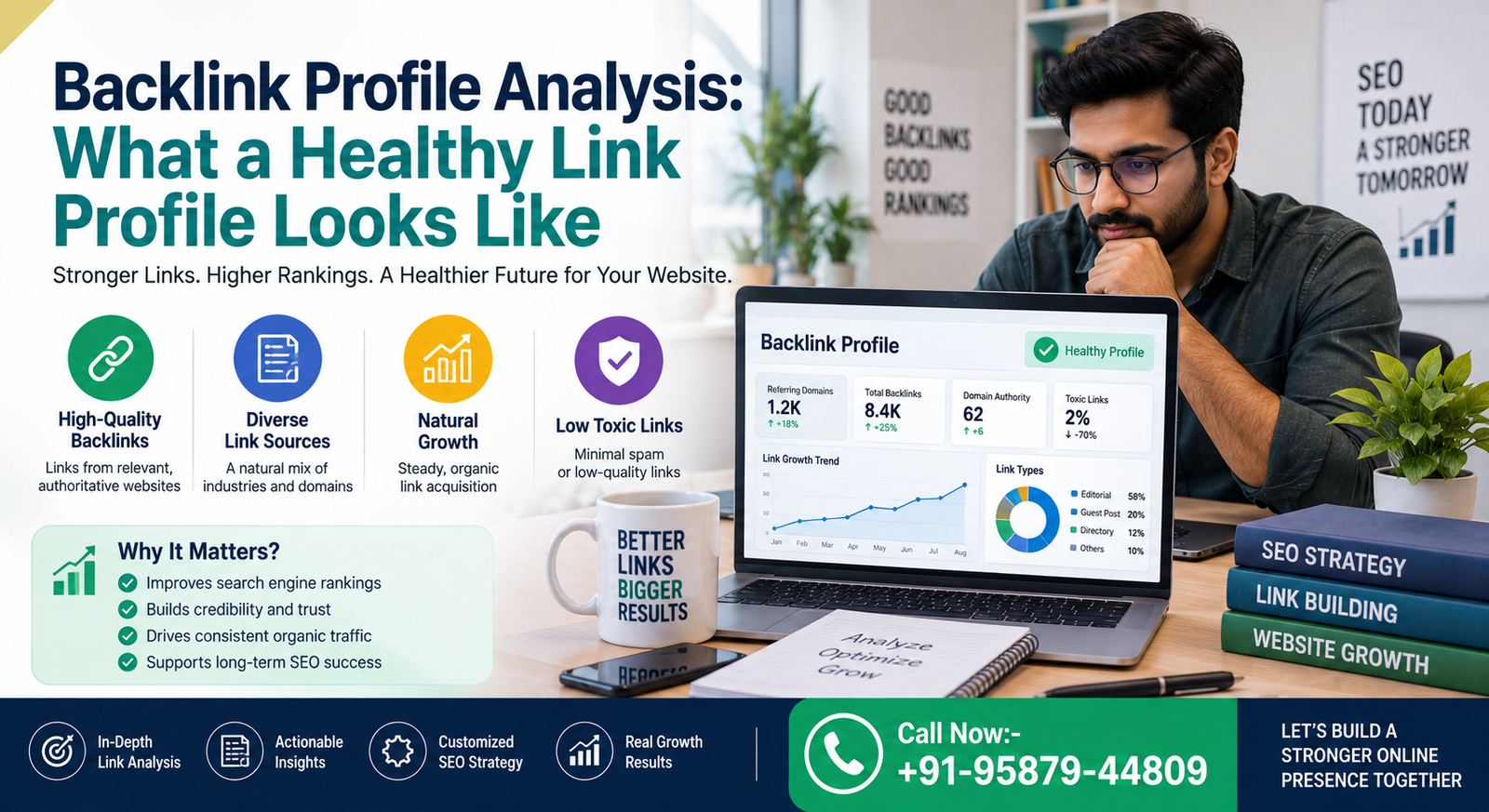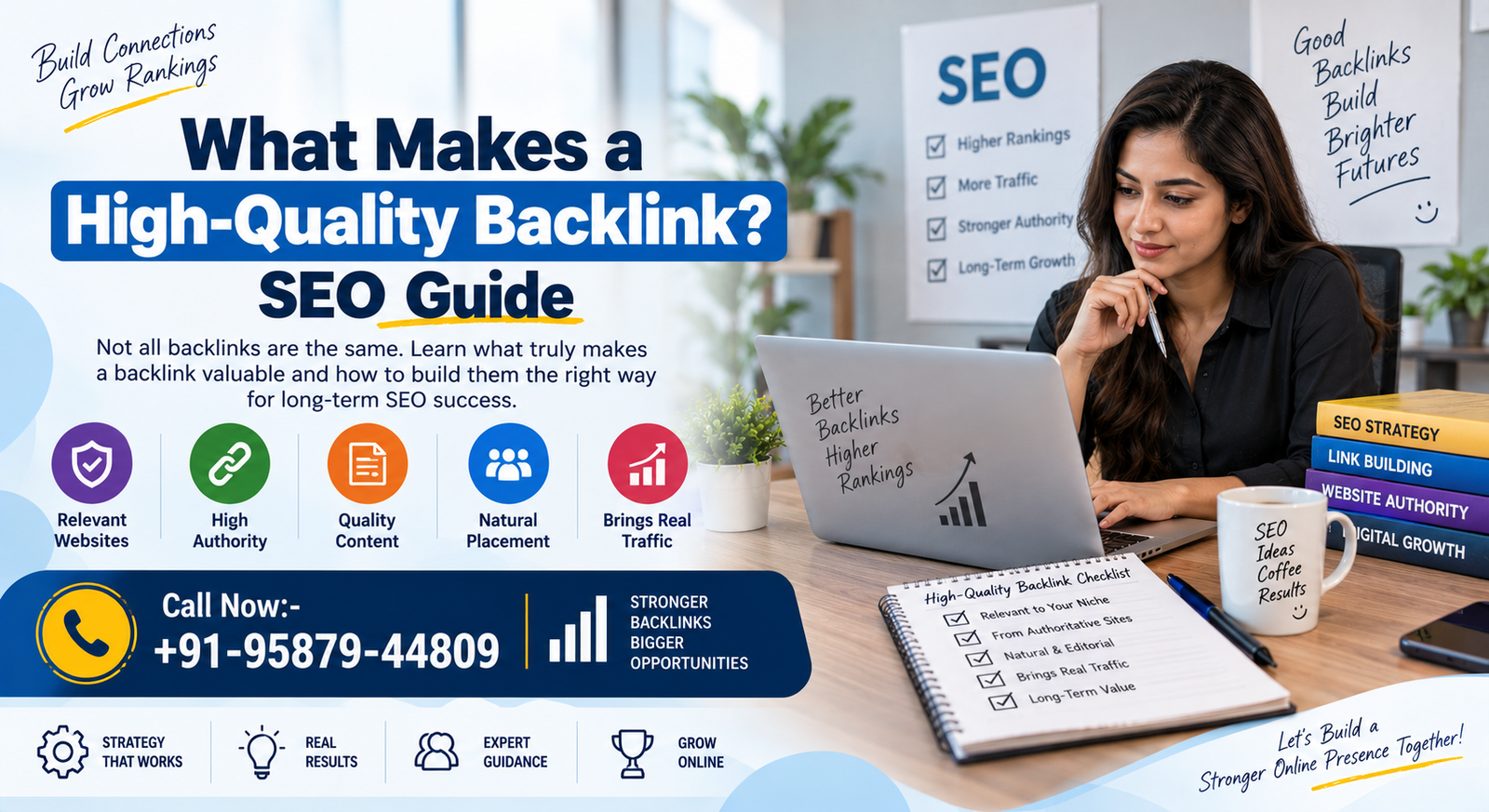
Are backlinks still important for SEO? People ask us this a lot, and yes, but not in the way most beginners assume. Somewhere along the way, “get more backlinks” turned into an obsession with the number itself, and that number, on its own, doesn’t tell you much. One link from a trusted, relevant site can do more for your rankings than fifty from random directories.
So what actually separates a high-quality backlink from a forgettable one? It comes down to relevance, authority, and how naturally the link earns its place on the page. In this guide, we’ll break down the signals that define backlink quality, show you how to spot the good ones, and help you stop wasting time on links that never move the needle. By the end, you’ll know exactly what to look for The Digital Socialite .
What Is a Backlink?
A backlink is just a link from one website to another. Simple as that. A blog covering digital marketing links out to your article on keyword research — that link pointing back to you is a backlink. Search engines have leaned on links like this for a long time, using them to find new pages and figure out how those pages connect to everything else online. It’s a bit like a vote of confidence: one site telling Google, “hey, this page is worth a look.” That’s the whole logic behind quality backlinks — trust and relevance, passed from one site to another.
Backlinks vs Internal Links
These two get confused all the time, so here’s the short version. A backlink comes from somebody else’s website and points to yours. An internal link never leaves your own site — one blog post linking to another post you wrote. And an outbound link is the reverse of a backlink: you linking out to someone else. All three matter for SEO in different ways, but only backlinks tell Google that other sites trust your content enough to send people to it.
What Makes a Backlink High Quality?
This is really the core of the whole topic, so let’s go through it piece by piece.
1. Relevance of the Linking Website
A link from a site in your own niche just makes more sense than one from somewhere completely unrelated. An SEO blog linking to a digital marketing article — fine, that tracks. A food site linking to a restaurant review, same idea. Real estate site, property content, same story. But a car-parts forum linking to a page about real estate listings? That’s a stretch, and search engines are pretty good at spotting the mismatch. Honestly, relevance might be the single biggest thing that decides whether a link is actually doing anything for you.
2. Trust and Authority of the Website
Sites that have been around, publish consistently, and run a genuine editorial process tend to pass along more value through their links. Their content’s been vetted, their link profile looks natural (because it is), and readers already trust what they put out. You’ll hear people throw around Domain Rating, Domain Authority, or Authority Score as shorthand for “how strong is this site” — and sure, those are handy for a quick gut check. But they’re not Google ranking scores. They never were. They’re third-party estimates built by SEO tool companies, not numbers Google itself calculates.
3. Editorially Placed Links
There’s a real difference between a link that’s woven into a piece of content because it genuinely helps the reader, and one that’s just sitting in a footer, a sidebar widget, or some generic directory page nobody reads. The first kind — the editorial kind — carries far more weight than anything dropped into a template.
4. Context Around the Link
Whatever paragraph the link sits in should actually connect to the page it points to. If an article about kitchen renovations suddenly links out to a crypto trading page with zero explanation, that’s a red flag — for readers, sure, but also for anyone (or anything) trying to evaluate how relevant the link really is.
Why Relevance Matters More Than Just Domain Authority
Here’s a trap a lot of people fall into: chasing links purely because a site has a big DA or DR number attached to it. But authority by itself doesn’t make a link valuable. A relevant link from a moderately strong site can outperform an unrelated link from a domain everyone’s heard of. One well-placed quality backlink in the right context usually beats several links that don’t fit. Relevance and site quality need to be weighed together — don’t chase a site just because its DA looks impressive on paper.
Example of a Relevant Backlink
Say a respected digital marketing site links to your in-depth guide on SEO backlinks. Same audience, same topic, the link reads naturally to anyone who clicks it. That’s the kind of link that actually helps.
Example of an Irrelevant Backlink
Now picture that same guide getting linked from, say, a pet grooming blog. Decent authority, sure — but there’s no real connection between the two topics, so the link doesn’t add much context for anyone, human or algorithm.
Does Anchor Text Affect Backlink Quality?
Anchor text is simply the clickable words in a link. A few common types: branded (“The Digital Socialite“), a naked URL, generic phrases like “click here,” partial-match (part of your target keyword), and exact-match (the keyword itself, word for word).
Keep Anchor Text Natural
If every backlink pointing at your site uses the exact same keyword-stuffed anchor, that pattern looks off — and it’s noticeable, to both readers and search engines. A natural link profile is messier than that. Sometimes it’s “The Digital Socialite,” sometimes “learn more about SEO,” sometimes “SEO backlink guide,” sometimes just the bare URL. We’re not going to tell you to engineer anchor text purely to game rankings; real backlink building just doesn’t work that way long-term.
Where the Backlink Is Placed Matters
Contextual Links Within Main Content
Links tucked naturally into the body of an article — where they actually add something for the reader — are the most meaningful kind you can earn. Nothing beats these.
Links in Footers, Sidebars and Templates
A link that shows up on every single page of a site, stuffed into a footer or a widget, behaves nothing like a single deliberate mention inside an article. They’re just different animals.
Links From Authoritative Resource Pages
Resource pages and “further reading” lists can still be worthwhile, as long as the link is there because it helps the reader — not just to pad out a list and look comprehensive.
Dofollow vs Nofollow vs Sponsored vs UGC Links
A quick rundown of what these link attributes actually signal.
Nofollow Links
A rel=”nofollow” tag tells search engines: don’t pass ranking credit through this one.
Sponsored Links
Any link tied to a paid placement or ad deal should carry the sponsored attribute — it’s basically disclosure, built into the code.
UGC Links
Links coming from user-generated content, like blog comments or forum posts, typically get the UGC tag, since a site owner can’t fully police what visitors post.
Why You Should Not Judge a Backlink Only by “Dofollow”
It’s tempting to write off every nofollow link as pointless. That’s not quite fair, though. A nofollow link can still bring referral traffic, put your brand in front of new people, and build credibility — even if it’s not passing ranking signals the way SEOs like to obsess over.
High-Quality Backlink vs Low-Quality Backlink
Sometimes a table just says it faster than paragraphs can. Here’s the difference between high-quality and low-quality backlinks, side by side:
| High-Quality Backlink | Low-Quality Backlink |
| Relevant website | Unrelated website |
| Useful editorial context | Random placement |
| Genuine content | Thin/automated content |
| Natural anchor text | Excessive exact-match anchors |
| Real audience | Little or no genuine audience |
| Editorially earned | Manipulatively created |
| Trusted website | Spammy website |
| Provides user value | Exists mainly for SEO |
How to Evaluate a Backlink Before Building It
Wondering how to identify high-quality backlinks before you spend hours on outreach? Run every opportunity through a quick gut-check first. Do this consistently and you end up with high quality backlinks, instead of a folder full of links doing absolutely nothing for you.
Check Topical Relevance
- Is this website actually related to what I do?
- Does the specific page cover something relevant?
Check Website Quality
- Content quality
- Design and usability
- Publishing consistency
- Author info visible or not
- General reputation
Check the Linking Page
- Page relevance
- What it already links out to
- Content quality
- Where your link would sit
Check for Obvious Spam Signals
- Ads everywhere
- Thin, AI-generated filler pages
- Thousands of unrelated outbound links
- Casino, adult, or pharma spam
- Auto-generated content
- Sketchy guest-post-for-sale networks
How to Earn High-Quality Backlinks Naturally
How to build high-quality backlinks naturally, without shortcuts that come back to bite you later? Stop hunting for links and start creating things worth linking to.
Create Original Research and Data
Original stats, surveys, studies — people love citing numbers nobody else has. It’s one of the fastest ways to earn links you didn’t ask for.
Publish Helpful Guides
A genuinely thorough guide gets referenced again and again, mostly because it actually solves the problem someone searched for.
Create Link-Worthy Resources
- Checklists
- Templates
- Case studies
- Industry reports
- Original tools
- Infographics
Digital PR and Expert Contributions
Legitimate PR work, interviews, expert commentary in trade publications — all solid, slow-and-steady ways to pick up authoritative backlinks over time.
Promote Your Best Content
Great content alone doesn’t guarantee anything; the right people still need to find it. Building good backlinks for SEO takes real patience, and honestly, that’s fine — it’s supposed to.
Backlink Practices to Avoid
Not every shortcut is worth the risk.
Buying Links Primarily to Manipulate Rankings
Google’s stance on link schemes built purely to game rankings is pretty well known at this point — and getting caught tends to cost more than it saves.
Excessive Link Exchanges
A bit of natural reciprocal linking happens on its own. “I’ll link to you if you link to me,” done at scale, starts to look manipulative fast.
Automated Backlink Generation
Software that spits out hundreds of low-quality links automatically does more harm than good — skip it entirely.
Spammy Guest Posting
A guest post should genuinely help the host site’s readers, not just exist as a vehicle for stuffing in a keyword-rich link.
Private Blog Networks and Manipulative Schemes
These carry real risk and sit outside search engine guidelines. Not worth the gamble, honestly — better to avoid them altogether.
How Many High-Quality Backlinks Do You Need?
There’s no magic number, and anyone who gives you one is guessing. SEO was never really a backlink-counting contest, even though it sometimes gets treated that way. Quality, relevance, and the overall strength of your site matter more than raw count — one genuinely useful editorial mention can do more than a dozen irrelevant ones combined. Looking at what competitors’ backlink profiles look like can spark ideas, sure, but copying them link for link isn’t a strategy on its own.
How to Check Your Backlink Profile
Not sure how to check backlink quality across your whole site? A few tools make this a lot less painful.
Google Search Console
Free, and a good starting point for seeing what Google itself reports linking to you.
Ahrefs
A go-to for backlink discovery and digging into what competitors are doing.
Semrush
Handy for full backlink audits and studying referring domains in bulk.
Moz
Known for link analysis and its own authority metrics — again, useful for analysis, not a Google ranking score.
Read Also:-Backlink Profile Analysis: What a Healthy Link Profile Looks Like
FAQs About High-Quality Backlinks
Q.1 What is a high-quality backlink?
Ans. A high-quality backlink comes from a relevant, trustworthy site, sits naturally inside useful content, and actually benefits the reader — not just your rankings.
Q.2 What makes a backlink valuable for SEO?
Ans.Relevance of the linking site, the overall quality of that site, how naturally the link fits its context, and whether it was earned rather than bought or forced.
Q.3 Is a high-DA backlink always good?
Ans.Not automatically. Domain Authority alone doesn’t guarantee value — relevance and context matter just as much, sometimes more.
Q.4 Are nofollow backlinks useful?
Ans.Yes, actually. They can still send referral traffic, build visibility, and add credibility, even without passing traditional ranking signals.
Q.5 How can I get high-quality backlinks?
Ans.Useful content, original research, legitimate PR, expert contributions, and real relationship-based outreach — the basics behind any decent high-quality backlink SEO approach.
Q.6 Are paid backlinks bad for SEO?
Ans.Depends on intent. Disclosed advertising or sponsorship is a different thing entirely from paying someone purely to manipulate rankings.
Q.7 Should I remove every low-quality backlink?
Ans.Not automatically, no. Save the effort for genuine spam or manipulation concerns, and follow Google’s current guidance rather than panicking over every average-looking link.
Final Thoughts
Backlink quality beats backlink quantity, pretty much every time. Relevance, site quality, editorial context, natural placement, varied anchor text — these are the things that actually decide whether a link helps you. Chasing links purely to manipulate rankings tends to backfire sooner or later. The better play is creating things people genuinely want to reference, aiming for high-quality backlinks for SEO instead of raw volume, and checking in on your backlink profile every so often instead of ignoring it. If you’re looking to build out your organic visibility properly, The Digital Socialite (digitalsocialite.com) can help you put together a broader SEO strategy — one built around real content, technical SEO, authority, and growth that actually lasts.