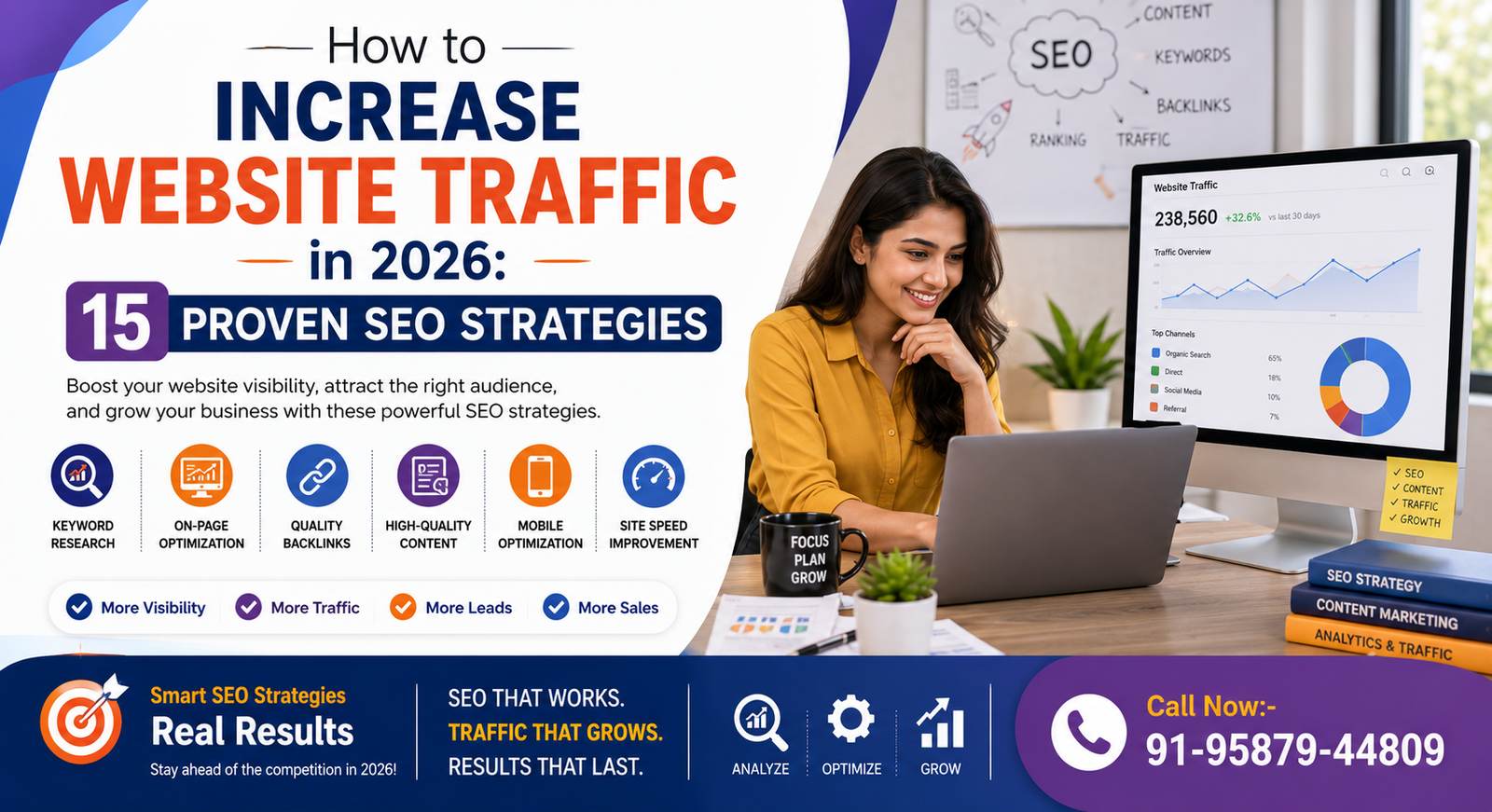
Everyone wants to know how to increase website traffic, and honestly, there’s no magic switch. It comes from a handful of channels working at once — organic search, direct visits, referrals, social media, email, ads if you’re running them. SEO’s still the backbone of most of this, because it keeps working even while you’re not actively pushing it.
Google isn’t rewarding content built to game search anymore, not that it ever really worked long-term. Their guidance keeps pointing at the same idea: write something helpful, be reliable, put the reader first. And traffic for traffic’s sake isn’t that useful — 800 visitors who actually enquire beats 5,000 who bounce in three seconds. Here’s what this guide covers.
- Perform keyword research based on search intent
- Create helpful, people-first content
- Optimize existing content for more organic traffic
- Improve your SEO titles and meta descriptions
- Build a strong internal linking structure
- Improve website speed and page experience
- Optimize your website for mobile users
- Build topic clusters and topical authority
- Earn high-quality backlinks
- Optimize for local SEO
- Use Google Search Console to find traffic opportunities
- Update and refresh old content
- Promote content beyond Google search
- Improve conversion rate along with traffic
- Track, test and improve your SEO strategy
1. Perform Keyword Research Based on Search Intent
Focus on Search Intent
This is where it starts. Skip it and you’re basically guessing. Searches fall into four rough buckets — informational, commercial, transactional, navigational. Miss the intent and your page won’t rank, or it ranks and doesn’t convert.
Target Long-Tail Keywords
There are fewer people searching for “Best digital marketing agency in Jaipur” than those searching for “digital marketing agency”, but the people searching the longer phrase know what they want – less traffic, better traffic.
2. Create Helpful, People-First Content
I know, everyone says this. But it’s still where most sites drop the ball. Write like you’re answering a friend who texted you the question, not stuffing a keyword template. Add your own take, use a real example, and don’t just reword a competitor’s post — Google’s guidance says content built mainly to chase search traffic isn’t what gets rewarded.
Content Quality Over Content Quantity
Twenty so-so posts a month probably won’t beat five people actually bookmark.
3. Optimize Existing Content for More Organic Traffic
You don’t always need something new — the win is often sitting in your Search Console data already. Find pages with decent impressions but hardly any clicks, then fix them: sharper title, better headings, updated facts, a missing subtopic, more internal links, tighter intent alignment.
4. Improve Your SEO Titles and Meta Descriptions
SEO Title Best Practices
Describe the page honestly, work the keyword in naturally, be specific, skip the clickbait.
Meta Description Best Practices
Summarise the page, say what’s in it for the reader, keep it natural. A snappy description doesn’t move rankings by itself — it just makes people more likely to click.
5. Build a Strong Internal Linking Structure
Link blog posts to the service pages they relate to, tie supporting articles back to a pillar page, and use anchor text that says something. A Digital Marketing Guide pillar page could point to an SEO Guide, a Google Ads Guide, a Social Media Marketing Guide — giving search engines a clearer sense of how your site fits together.
6. Improve Website Speed and Page Experience
Load times, mobile responsiveness, optimised images, caching, cutting unneeded scripts — none of it’s glamorous, but it adds up. Google’s said its systems reward a good overall experience rather than one number.
Don’t Optimize for Speed Alone
A page that loads fast but says nothing useful still won’t keep anyone around.
7. Optimize Your Website for Mobile Users
Most visitors are on a phone. Responsive design, readable text, easy navigation, forms that don’t fight back, tappable buttons — and no pop-up shoving itself in someone’s face the second they land.
8. Build Topic Clusters and Topical Authority
Pick a main topic and build outward — technical SEO, on-page SEO, local SEO, keyword research, link building, tools, analytics, pricing — all linked together. It gives readers somewhere to keep going and tells Google you’ve actually covered the subject.
9. Earn High-Quality Backlinks
Ethical Link-Building Methods
Original research, digital PR, guest posts on sites that fit, useful resources, local partnerships, expert interviews, stats worth citing. Google notes links from reputable sites can signal trust, though it’s not a formula where more links equals higher rank.
Avoid Spammy Link Building
Bought links, link farms, automated schemes, random directory listings tend to backfire.
10. Optimize for Local SEO
This is a must-have if you have a business in just one city or region: Google Business Profile, local keywords, location pages, real reviews, consistent name/address/phone info, local backlinks. “SEO company in Jaipur” or “website designer near me” is about as clear as search intent can get.
11. Use Google Search Console to Find Traffic Opportunities
It’s free, and most people barely open it. Search Console shows the queries bringing people in, plus impressions, clicks, CTR, and average position.
Find “Almost Ranking” Keywords
Pages sitting just outside the top results are worth a second look — more content, better intent alignment, a couple more internal links, a sharper title. No guarantee of page one, but it moves things.
12. Update and Refresh Old Content
Go back through older stuff now and then — broken links, stale numbers, anything that’s changed since publish. Google’s been clear on one thing: changing the date without updating the content doesn’t fool anyone.
Refresh With a Purpose
Only update a page if there’s something real worth adding.
13. Promote Content Beyond Google Search
SEO alone leaves a reach on the table. Put content out on LinkedIn, Instagram, YouTube, your email list, and communities your audience actually hangs out in.
Repurpose Your Content
One solid article can become a short video, social posts, an infographic, an email. Reach isn’t the goal — it’s pulling the right people back to your site.
14. Improve Conversion Rate Along With Traffic
Traffic doesn’t pay the bills alone. Strengthen CTAs, contact forms, landing pages, navigation, testimonials, FAQs. Don’t obsess over growing your traffic. Obsess over how many of those visitors convert to leads or customers.
15. Track, Test and Improve Your SEO Strategy
SEO’s never really done. Keep watching organic clicks, impressions, rankings, conversions, engagement, and which pages are climbing versus sliding.
Create a Monthly SEO Review
Once a month, sit with the numbers — what’s winning, what’s slipping, new keyword opportunities, content needing a refresh, missing links, conversion trends. Base decisions on that, not every ranking wobble.
Free Ways to Increase Website Traffic in 2026
Not everything here costs a rupee:
- Writing content that’s actually useful, cleaning up what’s already published
- Fixing internal links, actually using Search Console
- Setting up a Google Business Profile, if that applies to you
- Posting on social media, building real relationships with other sites
- Answering customer questions, refreshing old pages, a helpful video here and there
- Growing an email list, slowly but surely
Free doesn’t mean effortless. It still eats time and takes some know-how to do properly.
How Long Does It Take to Increase Website Traffic With SEO?
It varies – site age, niche competition, domain authority, content quality, technical health, and how consistent you actually are all matter. Any promise of page one rankings in 30 days is a red flag, not confidence. Think of SEO as something you build over months, not flip on. Better.
Why Choose Digital Socialite for SEO and Website Growth?
Traffic that sticks around needs a real plan behind it, and that’s what Digital Socialite puts together — SEO strategy, keyword research, technical and on-page SEO, local SEO, content optimisation, link-building, competitor research, and tracking through Google Analytics and Search Console, wrapped up with monthly reporting.
Want a strategy built around your actual business, not a template? Get in touch with Digital Socialite and let’s talk through your website, audience, keywords, and goals at .
Frequently Asked Questions About Increasing Website Traffic
Q.1How can I increase website traffic quickly?
Ans.Paid ads, social pushes, and partnerships move faster than SEO.
Q.2How can I increase website traffic organically?
Ans.Keyword research, helpful content, on-page SEO, internal links, technical SEO, local SEO, earned backlinks.
Q.3How do I get more traffic from Google?
Ans.Write things that are genuinely useful, keep the technical side clean, match search intent, build authority over time.
Q.4How long does SEO take to increase traffic?
Ans.Depends on site age, competition, and consistency — sometimes months, sometimes longer.
Q.5Can I increase website traffic without paid advertising?
Ans.Yes — organic search, referrals, social media, email, and partnerships can all bring people in without ad spend.
Q.6Does more website traffic mean more sales?
Ans.Not on its own. Traffic quality, intent, conversion rate, and site experience all decide that.
Q.7Is blogging still useful for SEO in 2026?
Ans.Yes, as long as it’s written for the reader, not the algorithm.
Conclusion – Increase Website Traffic With a Long-Term SEO Strategy
Put it together and it’s really: keyword research, content people actually want, refreshing what’s already there, better titles, solid internal links, decent page experience, mobile-friendliness, topic clusters, honestly earned backlinks, local SEO, Search Console data, promotion beyond Google, and conversion work — tracked continuously. None of it stands alone, and none of it happens in a week.
If you’d rather have someone build this out for you, Digital Socialite can put together a plan around your site, audience, and goals — reach out at.