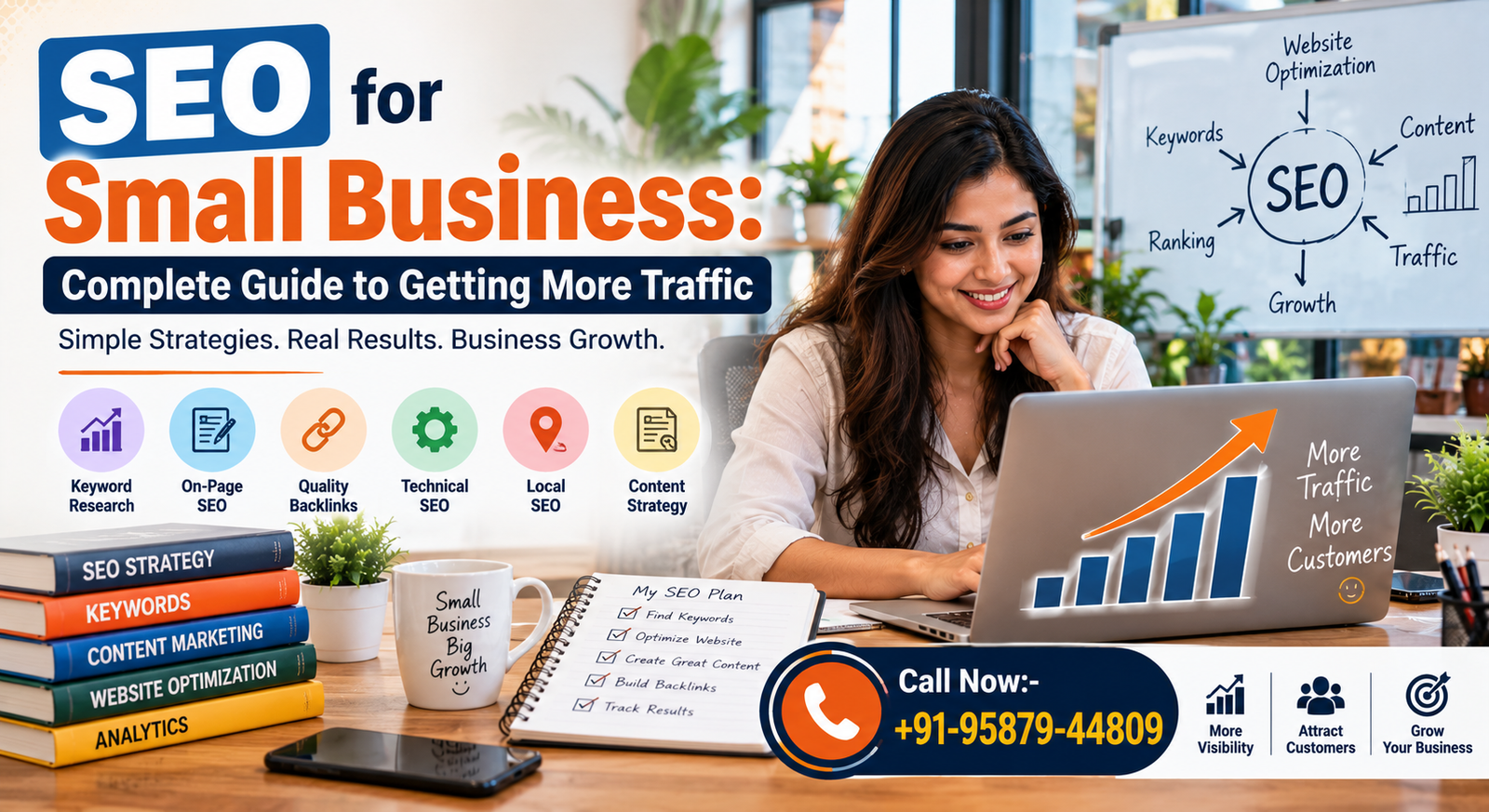
Something we hear from small business owners all the time: “We do great work, so why doesn’t anyone find us?” Nine times out of ten, the answer is sitting in Google. Most customers type a need into that search box long before they pick up the phone, and if your site isn’t there, you’ve lost them before the conversation even began. That’s the whole case for SEO for Small Business, really. Get in front of people who are already looking, and you stop paying every time one of them clicks.
Paid ads work, no argument there. But they switch off the day your budget does. Organic search traffic is slower to build and much harder to take away once you’ve earned it. And you don’t need a giant budget to go up against the bigger brands, because a focused, local, genuinely useful website can beat a lazy corporate one.
We’re The Digital Socialite, a digital marketing company that helps businesses get seen online, and this guide covers what we’d want any owner to know first: keyword research, on-page SEO, local SEO, technical SEO, content and link building.
What Is SEO for Small Businesses?
Strip away the jargon and SEO is simply the job of making your website easy for Google to understand and easy for people to trust. Picture a small bakery in Jaipur. If its site clearly says what it sells, where it is and what makes it different, it has a fair shot at appearing when someone searches for a custom birthday cake nearby. That’s small business SEO in a nutshell. No hacks, no secret formula, just an honest website that answers what people are asking.
How SEO Helps Small Businesses
Do it consistently and a few things start happening. More people land on your site from search, more of the people who find you are the right ones, and the enquiries follow. You’re also building something that keeps working while you’re busy running the business, so you don’t have to keep paying for ads every month just to stay visible.
SEO vs Paid Advertising
Search for anything on Google and the first few results marked “Sponsored” are Google Ads. Somebody paid for that spot, and pays again with every click. Everything underneath is organic, earned through good content and a well-built site. Ads are fast. SEO is slower but usually cheaper per visitor in the long run, and plenty of businesses run both.
Why SEO Is Important for Small Businesses
Helps Customers Find Your Business
Think about the last time you bought something you weren’t sure about. You probably searched, opened a few tabs and read some reviews. Your customers do exactly the same. If you’re missing from those results, they’ll buy from whoever isn’t. Solid SEO marketing for small business makes sure you’re one of the tabs they open.
Builds Trust and Credibility
Nobody says it out loud, but people trust what shows up on page one a little more. A business that keeps appearing for the right searches starts to feel established, even to someone who has never heard of it.
Brings Targeted Traffic
A thousand random visitors is a nice number to show your friends, but it won’t pay the rent. Fifty people who searched for exactly what you sell are worth far more. That’s the gap between general traffic and search traffic.
Supports Long-Term Growth
A good page keeps earning. An article you write this month can still be bringing in enquiries a year from now with barely any upkeep.
How to Create an SEO Strategy for a Small Business
You don’t need a fancy plan. You need an order to do things in. Here’s a simple one for putting together an SEO strategy for small business owners starting from scratch.
Define Your Business Goals
Start with what you actually want. Maybe it’s more phone calls, or more enquiries through the contact form. Maybe it’s online sales, more local customers, or just more people visiting the site. Pick one or two, because the goal decides everything that comes after
Identify Your Target Audience
Next, get clear on who you’re talking to. Where do they live? What are they trying to solve? Do they browse casually, or are they ready to buy today? Someone typing “how to fix a leaking tap” wants advice. Someone typing “emergency plumber near me” wants a phone number.
Find the Right Keywords
Finally, choose keywords. Base them on what you sell, where you sell it, the problems customers keep bringing you and what they’re really after when they search.
Keyword Research for Small Business SEO
Keyword research comes first, before any content. Skip it and you’re writing blind, which is a costly way to find out nobody searches for the thing you wrote about. A little research up front tells you what people really type.
Focus on Long-Tail Keywords
Broad, one-or-two-word searches are a losing fight, since the big players already own them. You’ll do better with longer, more specific phrases, such as “SEO services for small businesses,” “digital marketing agency in Jaipur,” “affordable website development company” or “local SEO for small businesses.” Fewer people type those in, but the ones who do tend to be ready to hire, which is exactly the crowd you want.
Use Local Keywords
Local terms are gold for smaller businesses. Pair your service with a city or a neighbourhood, and don’t ignore “near me” searches either.
Understand Search Intent
It also helps to know why someone is searching. Broadly, there are four kinds:
- Informational, when they’re just trying to learn something
- Commercial, when they’re weighing up their options
- Transactional, when they’re ready to buy or book
- Navigational, when they’re looking for one particular brand or site
Avoid Keyword Stuffing
One last thing: don’t cram the keyword into every sentence. Read your copy out loud. If it sounds odd to you, it’ll sound odd to Google and to your readers.
On-Page SEO for Small Business Websites
Here are a few small business SEO tips for the pages that matter most on any SEO for small business websites project. None of it is hard, but it’s easy to forget.
SEO-Friendly Page Titles
Your page title should say what the page is about, plainly, with the main keyword worked in naturally. Skip the clickbait.
Meta Descriptions
That’s the little blurb under your title in search results. It won’t shoot you up the rankings by itself, but a good one gets people to click, so write it like a mini ad.
Heading Structure
Give every page one H1, then break things up with H2s and H3s in a sensible order. It helps readers skim and helps Google follow along.
URL Structure
Short and readable wins, so /seo-for-small-business/ beats /page?id=482 every time.
Internal Linking
Link your related pages and blog posts to each other. It keeps visitors reading and shows search engines how your content connects.
Image Optimization
Pictures matter too. Name files descriptively (cake-shop-jaipur.jpg, not IMG_4021.jpg), add alt text, compress them so pages don’t crawl, and upload sensible sizes rather than a 6MB photo squeezed into a tiny box.
Local SEO for Small Businesses
If you only take one section seriously, make it this one. People searching close to home are often ready to act, which is why local SEO for small business can bring calls and walk-ins faster than nearly anything else in this guide.
Optimize Your Google Business Profile
Claim your Google Business Profile and fill in every field properly. That means:
- The correct business name
- Your address or service area
- Phone number
- Website link
- The right business category
- A short, honest business description
- Real photos
- Accurate business hours
Get Genuine Customer Reviews
Ask happy customers for reviews. Genuine ones only, since faked reviews are obvious and risky. And reply to every review, the glowing ones and the grumpy ones, in a calm, professional tone.
Build Local Citations
Citations are just mentions of your business name, address and phone number on other directories. Make them match exactly. A different phone number on a single listing can quietly confuse Google.
Create Location-Based Content
Write for the places you serve: service and city pages, small local guides, blog posts about specific areas, a local FAQ page. It shows Google, and customers, that you actually know the area.
Content Marketing and SEO for Small Businesses
A small website can’t outspend anyone, but it can out-help them. Every time you answer a real customer question in an article, you give Google another reason to show your site. Nothing fancy required, only genuinely useful.
Create Helpful Blog Content
Good starting points are how-to guides, FAQs, product comparisons, cost guides, industry guides and troubleshooting articles. Pick whatever your customers keep asking about.
Update Existing Content
Older posts shouldn’t gather dust. Go back, fix outdated facts, add new examples, sharpen the keywords and link to your newer pages. It’s usually faster than starting fresh, and it often works better.
Create Content Around Customer Questions
The easiest topic list you’ll ever get is your own inbox. Note every question customers ask before they buy, on calls, over email, on WhatsApp, and turn each one into a post or an FAQ.
Technical SEO Basics for Small Business Websites
This bit sounds scarier than it is, and you can get through most of it without touching any code.
Improve Website Speed
If your pages take ages to load, people leave. It’s that simple. Compressing images and cutting unused plugins usually helps a lot.
Make Your Website Mobile-Friendly
Most of your visitors are on phones. Open your site on yours right now. Can you read it, tap the buttons and find the phone number? If not, fix that first.
Use HTTPS
HTTPS means the connection between your site and the visitor is encrypted. Browsers flag sites without it as “not secure”, which is not a good look.
Create an XML Sitemap
An XML sitemap is basically a list of your pages that you hand to search engines so nothing gets missed.
Fix Broken Links and Errors
Every now and then, run a check for broken links and error pages. Few things put a visitor off faster than clicking something and hitting a dead end.
Link Building for Small Business SEO
A backlink is just another website linking to yours, a bit like a recommendation from a neighbour. A few from trustworthy sites tell Google you’re worth listening to.
Create Link-Worthy Content
People only link to stuff that’s worth pointing at, so give them something. That could be a guide that saves your industry time, some original numbers you’ve gathered, up-to-date stats, or a handy resource other sites will want to send their readers to.
Build Local Business Relationships
Don’t overlook your own community. Local associations, partner businesses and reputable directories are all natural places for a link, and they come from real relationships.
Avoid Spammy Backlinks
Stay away from paid link packages and link swaps that look shady. Google is good at spotting them, and cleaning up the mess can take months.
Common SEO Mistakes Small Businesses Should Avoid
Targeting Only Highly Competitive Keywords
Everyone wants to rank for the big, shiny keyword. A small site rarely will, at least not yet, so mix in specific long-tail and local phrases you can actually win.
Publishing Thin Content
A hundred words of generic filler helps neither the reader nor the ranking. Say something useful and original.
Ignoring Local SEO
If you serve one city or a few areas, skipping local SEO means leaving easy customers on the table.
Neglecting Mobile Users
Most people visit from a phone. If the mobile version is clunky, they’ll bounce and you’ll never know why.
Expecting Immediate Results
SEO isn’t a switch. It takes steady effort and regular check-ins, and anyone promising overnight results is selling something.
How to Measure SEO Results
You can’t get better at what you don’t track, so if you’re wondering how to improve SEO for small business results over time, start by watching a handful of numbers.
Organic Traffic
See how many people reach your site from search each month, and whether that line is going up.
Keyword Rankings
Keep an eye on the few queries that matter most and note how they move over time.
Leads and Conversions
Traffic on its own doesn’t pay anyone. What counts is the calls, form fills, enquiries and sales that traffic produces.
Search Console and Analytics Data
Google Search Console and Google Analytics are both free, and between them they show what people searched, which pages they landed on and what they did next.
How Long Does SEO Take for a Small Business?
Honestly, nobody can give you a number and be right. It depends on too many things: how old your site is, how many others are fighting for the same searches, how much trust you’ve already earned, and how good your content and backlinks are. If you’re local, the businesses down the road matter too.
A brand-new site in a crowded market takes a lot longer than an established shop in a quiet niche. And the people who see results are usually the ones who keep showing up month after month.
So don’t wait for the day you hit page one. Check the small stuff instead: are more people seeing you in search, are you creeping up the rankings, are more enquiries landing in your inbox? If yes, it’s working.
SEO Checklist for Small Businesses
Print this out if it helps. Tick things off as you go, and don’t panic if you’re not there yet.
- Keyword research completed
- Important pages optimised
- SEO titles and meta descriptions added
- Website mobile-friendly
- Website speed improved
- Google Business Profile optimised
- Customer reviews encouraged
- Local citations checked
- Blog and content strategy created
- Internal links added
- Technical errors fixed
- SEO performance monitored
Read More:–Local SEO for Small Business: Complete Google Ranking Guide for 2026
Frequently Asked Questions About SEO for Small Businesses
Q.1 Is SEO worth it for a small business?
Ans.Yeah, most of the time, provided your customers actually search online for businesses like yours. It’s slower than ads, but it keeps paying off long after you’ve done the work. If hardly anyone in your customer base goes looking online, though, your money is probably better spent somewhere else.
Q.2 How much does small business SEO cost?
Ans. Ask ten agencies and you’ll get ten different quotes, and that’s normal. A lot rides on how crowded your market is, how big your site is, and whether you want to show up locally, nationally, or sell products online. Cheap help does exist for small businesses, but the price tag alone won’t tell you much. Ask what’s actually in the package. A decent provider will tell you plainly what they’re doing and why, and they won’t get defensive when you ask.
Q.3 Can I do SEO myself?
Ans. Some of it, sure. Page titles, your Google Business Profile, writing stuff your customers would actually want to read: you can do all that yourself without much trouble. But if the site has technical problems, or you’re competing against big names, I’d get a pro in. That’s where DIY tends to run out of steam.
Q.4 What are the most important SEO strategies for small businesses?
Ans. Keyword research, useful content, on-page SEO, local SEO, technical SEO and building authority through good links. They work best together.
Q.5 Does blogging help small business SEO?
Ans. It can. Useful posts aimed at real searches give you more chances to show up for what customers are typing.
Q.6 How can a small business get more traffic from Google?
Ans. Tidy up your existing pages, target the right keywords, publish helpful content, improve your local SEO and keep measuring what works.
Final Thoughts: Build Sustainable Growth With SEO
SEO was never really about ranking for a keyword. It’s about the right person finding your business at the moment they need it. Start small, keep going and give it time. If you’d like a hand with SEO, content, local SEO or your wider digital marketing, The Digital Socialite would be glad to help.
If you want to improve your website visibility and attract more relevant customers, The Digital Socialite can help you build a practical SEO strategy based on your business goals.